Revolutionizing the Solar Market Introducing Standardized Home Solar Systems

Introducing Standardized Home Solar Systems

In the present dynamism of market environments, it was really tough for buyers, spread across the globe, to source all-inclusive, standardized home solar energy systems.


No single manufacturer offers a complete solution, and therefore the user has to source solar panels, inverters, mounting structures, and wiring separately, usually with a custom design for each of them. This fragmented approach has resulted in frustration among purchasers and end-users. But our company is proud to bring to this industry a pioneering solution to this broad dilemma. We have developed a series of standardized home-based photovoltaic systems targeting the specific needs of the market.


The 5kW, 10kW, 15kW, 20kW, and 30kW solar Home Photovoltaic Systems they designed have met the needs of the vast majority of solar installation companies and end consumers, and have received widespread praise.


Key Features of Our Standardized Home PV Systems:


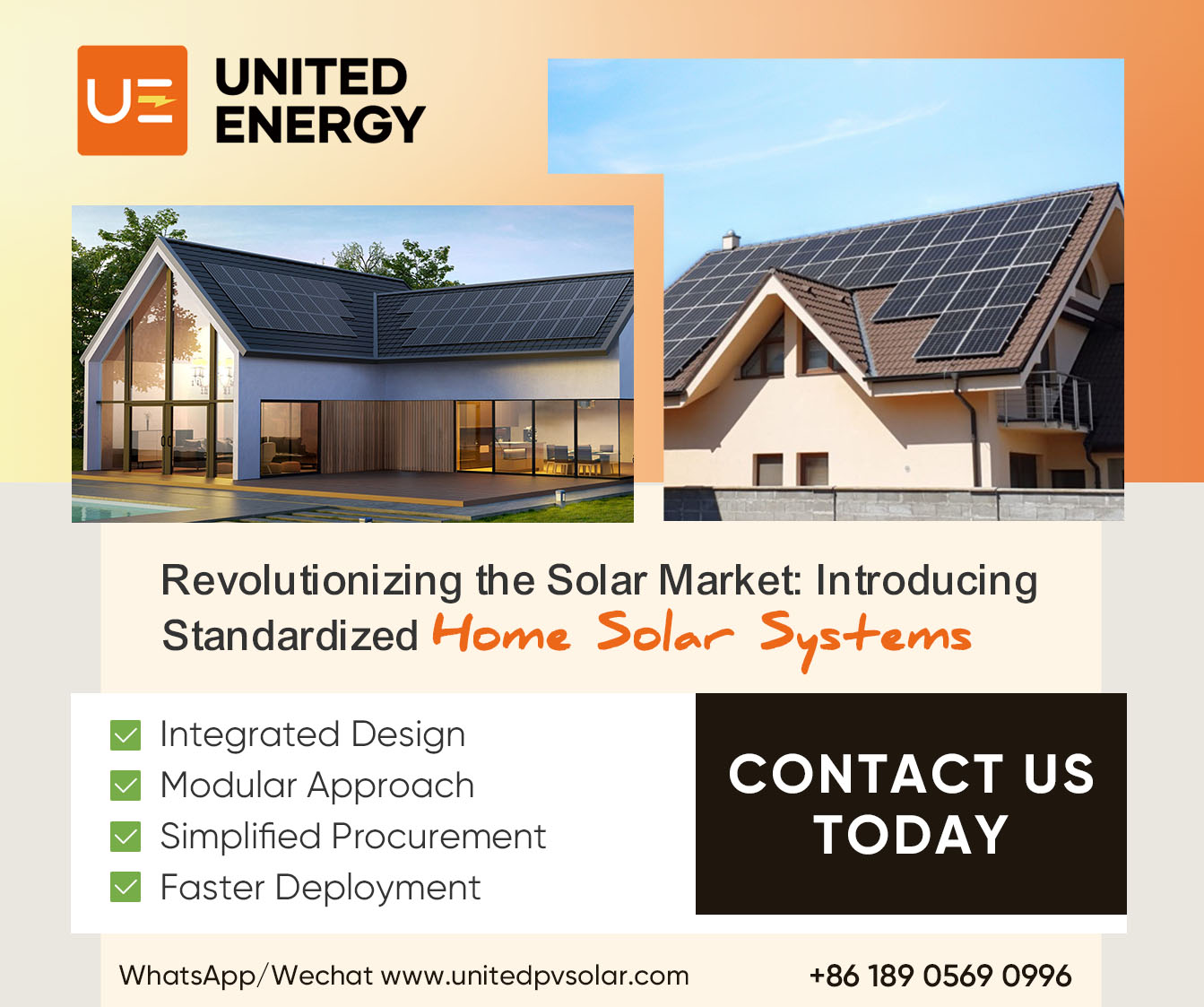
The Integrated Design: Our solutions, which are systems of solar panels, inverters, and complete mounting structures—all with all necessary wiring in one integrated solution without separate procurements and efforts for custom design.


Modular: Each system was designed with an individual one, allowing ready scaling and customization to different household sizes and their energy needs.


Standardized Configurations: Our standardized configurations are present for Off Grid, Hybrid, and Grid-Tied systems. It ensures that every variety in energy requirements and grid connectivity options are compatible.


Plug-and-Play Installation: The technology of plug-and-play installation with simple, clear installation instructions by using standardized systems. No special knowledge or skills required for exact homeowners or installers.


Quality assurance: Each part used in our standardized systems goes through an unsurpassed quality check for reliability, performance, and durability.


Benefits for Purchasers and Users:


Simplified Procurement: Our standardized approach ensures that Procurement is simplified, hence saving time and energy of the customers in the form of a one-stop solution for their solar energy needs. Cost Savings: As a user, you would realize cost savings flowing out of the need elimination for custom design, separate sourcing of components, and taking into account other traditional piecemeal approaches by virtue of our systems being standardized.


Faster Deployment: With plug-and-play installation, the systems we deliver easily deploy for faster, more efficient deployment with the least downtime for homeowners.


Scalability and Flexibility: The modules are designed in such a way that, with time, the system can be expanded or changed in order to meet the needs of changing energy requirements by homeowners or changes in case of any future upgrades.


Standardized configuration:Quality-test of individual components. These come with quality-tested components and standardized configurations to ensure that users receive the reliability and performance required by their business, topped with comprehensive warranties, together with after-sales support that would give peace of mind.


In the end, these standardized photovoltaic home systems, simple and low-cost, represent a new paradigm in the solar energy market and a reliable solution for the alternatives sought by homeowners or installers. We make purchasing simple, installation hassle-free, and quality performance guaranteed, so that consumers can adopt solar with ease and comfort while taking them down the pathway for sustainable energy futures.
 

United Energy Co.,Ltd
Add:No. 389-399, Jinzhai Road, Luyang District, Hefei City, Anhui Province
Mobile/Whatsapp/Wechat: +86 189 0569 0996
Email: info@ue-pv.com Web: www.ue-pv.com

Top

Shingled Solar Panels VS. Solar Tiles VS. Standard Solar Panels

When it comes to powering your home with solar energy, standard photovoltaic (PV) solar modules are a common choice. However, the cutting-edge technology of shingled solar PV panels offers an innovative alternative. It's important to note that shingled solar panels are distinct from solar tiles, despite their similar names and purposes. This article will explore the differences between shingled solar panels and solar tiles, compare shingled solar panels with conventional modules, and highlight the advantages of this technology to help you determine if it's the right option for you.

 Shingled Solar Panels Solar Tiles Standard Solar Panels


Shingled Solar Panels vs. Solar Tiles(Solar Shingles)


Shingled Solar Panels:

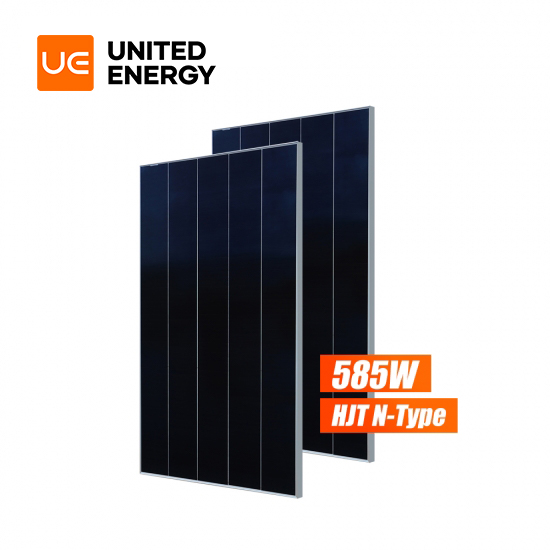
Shingled solar panels utilize laser slicing technology to cut solar cells into multiple strips and interconnect them with electrically conductive adhesive. This optimization of component structure achieves zero spacing between cells, allowing for a 5% increase in cell placement compared to other types of modules, effectively enhancing the solar panel's conversion efficiency.


Solar Tiles:

Solar tiles serve as both a source of electricity and structural support for your roof, integrating seamlessly into building aesthetics. However, while aesthetically pleasing, their conversion efficiency typically ranges from 15% to 20%, lower than shingled solar panels which can reach up to 23.5%. Moreover, solar tiles are priced higher, ranging from $0.8 to $2 per watt, compared to shingled solar panels which range from $0.18 to $0.25 per watt.


Shingled Solar Panels vs. Standard Solar Panels


Interconnection of Cells:

Conventional modules rely on copper busbars or ribbons to connect cells, resulting in gaps between them. In contrast, shingled modules eliminate these gaps by assembling cells into strips with electrically conductive adhesive. This method enhances efficiency and durability, with shingled panels boasting efficiency rates between 22% to 23.5%.


Panel Efficiency:

Standard solar panels typically achieve efficiencies ranging from 15% to 22.6%, while shingled panels surpass this range, reaching efficiencies between 22% to 23.5%. This higher efficiency is complemented by shingling technology's compatibility with glass-glass and bifacial techniques, further improving light absorption and minimizing losses.


Mechanical Performance:

Shingled solar panels demonstrate superior mechanical strength against external forces like wind and snow compared to conventional panels. They maintain structural integrity without micro-cracks or power attenuation even after rigorous load testing, ensuring long-term reliability.


Aesthetics:

Shingled solar cells offer a sleek, all-black appearance by eliminating visible ribbons and busbars, enhancing the overall design of buildings.


Advantages of Shingled Solar Panels


Higher Power Density:

Shingled solar panels maximize power production per square meter, utilizing the entire effective area without gaps, leading to increased energy output in less space.


Lower Energy Loss:

Parallel wiring of shingled solar cells minimizes the impact of shading and reduces energy losses compared to series-wired conventional cells. Additionally, lower ohmic losses contribute to improved performance.


More Aesthetic:

The sleek design of shingled panels enhances the visual appeal of homes, offering a modern and stylish alternative to conventional modules.


More Reliable:

Shingled panels exhibit robust performance, resisting shading, mechanical stress, and low current operation, ensuring consistent and dependable energy production.


Are Shingled Solar Panels Right for You?


Shingled solar panels are an innovative choice, particularly suitable for residential applications. As manufacturers adopt this technology, prices are expected to decrease, making them increasingly accessible. If you prioritize cutting-edge technology, enhanced power production, efficiency, reliability, and aesthetics, shingled solar panels are worth considering.


Less Expensive:

Compared to solar tiles, shingled solar panels offer a more cost-effective solution, both in terms of manufacturing and installation.


Easier Maintenance:

Shingled panels require minimal maintenance, primarily periodic cleaning, offering convenience and ease of ownership compared to solar tiles.


Conclusion


Shingled solar panels represent a promising advancement in solar technology, offering higher efficiency, improved aesthetics, and greater reliability. As the market expands and prices decrease, they become an attractive option for homeowners seeking efficient and stylish solar solutions.


Top

The Evolution and Future Trends of the Energy Storage Industry


energy storage system


Energy storage system is a fundamental pillar for the advancement of new energy sources. Utilizing renewable resources such as wind and solar power showcases significant variability in generation, presenting challenges in maintaining the delicate balance between power supply and demand essential for grid security. Consequently, the integration of energy storage emerges as a pivotal solution to flexibly regulate the energy landscape.


Electricity, with its instantaneous consumption, necessitates precise matching between generation and consumption to uphold grid stability. Projections from the EIA indicate that by 2050, wind and solar power will constitute 72% of renewable energy generation, nearly doubling their share from 2020. Unlike traditional fossil fuel sources with robust adjustability, wind and solar power exhibit characteristics such as low inertia, low damping, and weak voltage support, leading to significant fluctuations that complicate the balancing act between generation and consumption. Consequently, surplus energy often goes to waste, resulting in phenomena like "curtailment." In 2023, China alone witnessed over 300 billion kilowatt-hours of wind and solar power curtailment, valued at over 100 billion yuan. Energy storage deployment offers a perfect remedy to this issue: excess power during peak generation periods can be stored, and stored energy can be released during peak consumption periods, ensuring real-time energy matching and grid stability.


Among various energy storage technologies, lithium-ion battery storage leads in commercialization. Representing the highest proportion of modern energy storage solutions, electrochemical storage systems based on lithium-ion batteries consist of battery packs, Battery Management Systems (BMS), Energy Management Systems (EMS), Energy Storage Converters (PCS), and other electrical components. Battery packs serve as the primary energy storage units, while BMS monitors, evaluates, protects, and balances batteries. EMS handles data collection, network monitoring, and energy scheduling, while PCS enables bidirectional conversion between AC and DC, controlling battery charging and discharging processes. With battery costs accounting for over 60% of the overall cost structure, and PCS costs around 10%, lithium-ion battery storage has established itself as the most mainstream and mature energy storage technology.


Lithium-ion battery storage can be categorized into lithium iron phosphate (LFP) and ternary lithium battery systems. LFP batteries, characterized by their safety, excellent low-temperature performance, good cycle life, and relatively lower cost, represent the primary technical route for lithium battery energy storage in China. Meanwhile, ternary lithium batteries, known for their high energy density, small footprint, and early development advantages, still maintain a significant market share in regions like Europe and the United States.


The global energy storage landscape is witnessing a surge in utility-scale deployments in China and the United States, alongside residential-scale installations in Europe. In 2022, the global energy storage market reached 50GWh, with the United States, Europe, the Middle East, and Africa (EMEA), and China accounting for significant shares. By 2026, these proportions are expected to shift, with the United States, China, and EMEA emerging as the leading contributors.


In conclusion, the energy storage industry is pivotal for addressing the intermittency of renewable energy sources and ensuring grid stability. As lithium-ion battery technology continues to evolve and costs decline, energy storage solutions are poised to play an increasingly significant role in shaping a sustainable and reliable energy future.


Top

The Future of Battery Energy Storage Systems

In recent years, Battery Energy Storage Systems (BESS) have become a core driver of the global energy transition. According to recent research reports by the International Energy Agency (IEA) and Bloomberg New Energy Finance (BloombergNEF), global investments in battery energy storage systems reached an all-time high in 2023, with deployment rates hitting unprecedented growth. This trend not only reflects the market's strong demand for clean energy technologies but also highlights the crucial role that battery storage will play in future energy systems.


Rapid Growth in Global Investment and Deployment

Both the IEA's "Special Report on Battery Storage and Energy Security" and BloombergNEF's "Global Energy Storage Outlook" report highlight that global investment in battery energy storage systems in 2023 exceeded any previous year. The IEA report states that the total installed capacity of various energy storage systems worldwide in 2023 was 42GW, indicating that battery energy storage systems received the most investment among all energy sector technologies. Meanwhile, BloombergNEF estimates that the global deployment of energy storage systems (excluding pumped hydro storage) in 2023 was 44GW/96GWh, almost three times the scale of 2022. It is projected that the global addition of energy storage systems will grow by 60% in 2024, reaching 67GW/155GWh. By the end of 2030, the compound annual growth rate (CAGR) of the energy storage market will be 21%.

This growth rate means that by 2030, the global deployment of new energy storage systems will reach 137GW/445GWh, with cumulative deployment hitting 782GW/2205GWh. The growth rate of installed energy storage systems will far outpace that of solar and wind power installations, with BloombergNEF forecasting compound annual growth rates of 8.9% and 6.6% respectively for solar and wind power from 2024 to 2030.


Regional Market Dominance

By 2030, China and the Asia-Pacific region will dominate the global energy storage market. BloombergNEF notes that the continued decline in the cost of battery energy storage systems is a key factor driving rapid deployment. As of February 2024, the average cost of a 2-hour duration battery energy storage system operating in China had dropped to $115/kWh, a 43% decrease compared to the same period last year.

Driven by the Chinese market, the Asia-Pacific region will account for half of the world's new energy storage systems. The EMEA region (Europe, Middle East, and Africa) will see its market share rise from 11% in 2023 to 19% by 2030, while the Americas' market share will drop from 28% in 2024 to 19% in 2030. The United States will become the world's second-largest energy storage market, adding 7.4GW/22GWh in 2023, with a cumulative deployment of 134GW/484GWh expected by 2030. Germany will emerge as the third-largest energy storage market, with cumulative deployments reaching 62GW/109GWh by 2030.


Power and Transportation: Twin Pillars of Decarbonization

Battery energy storage systems contribute significantly to the global energy transition, impacting not only the power sector but also the transportation sector. IEA Executive Director Fatih Birol emphasizes that the power and transportation industries are critical to achieving energy transition and limiting global warming. Since 2010, the cost of lithium-ion batteries has decreased by approximately 90%, with higher energy density and longer lifespan making them dominant in electric vehicles and battery energy storage systems.

Despite the ubiquity of batteries in modern life, the energy sector, including electric vehicles and battery energy storage systems, currently accounts for 90% of lithium-ion battery demand, up from about 50% in 2016. Battery prices have fallen from $1400/kWh in 2010 to below $140/kWh in 2023, providing strong support for decarbonizing the power and transportation sectors.


Despite the rapid rise of battery energy storage technology, its further development still requires policy support. BloombergNEF points out that most leading energy storage markets have set deployment targets, and government subsidies and policy frameworks are crucial for expanding battery energy storage system deployment. The IEA report also notes that while battery energy storage systems are already cost-competitive compared to coal power plants in India, further cost reductions are needed to scale up deployments.

Moreover, diversifying the battery supply chain is vital. Currently, global battery production and supply chains depend on a few countries, posing potential risks. BloombergNEF indicates that although investments in energy transition technologies have generally increased, the expansion of battery manufacturing and supply chain investments is still insufficient to meet global carbon emission goals.


In conclusion, battery energy storage systems will play an indispensable role in the future energy landscape. With advances in technology and declining costs, these systems will not only drive decarbonization in the power and transportation sectors but also provide a solid foundation for the global energy transition. Despite the challenges, the future of battery energy storage systems remains promising, driven by policy support and market demand.

Top

The Impact of Inadequate Sealing of Photovoltaic Modules

In the production and installation of photovoltaic (PV) modules, the sealing of the backboard frame and the bonding of the junction box are crucial steps. High-quality silicone sealants with strong adhesion and excellent sealing properties are usually used for encapsulation. If this step is not done properly, what impacts can it have?

1. Infiltration of Destructive Liquids and Gases

PV panels are exposed to the external environment for long periods, making it easy for rainwater and dust to penetrate the interior. If the sealing is not done correctly, it can lead to corrosion of the solar cells, affecting the power generation efficiency of the PV panels and potentially causing damage.

2. Impact on the Integrity of PV Panels, Reducing Their Operational Lifespan

The tightness between PV components can enhance their ability to withstand external forces. If the components are poorly sealed and the bonding is not firm, it can cause loosening or aging of the panels, significantly reducing the lifespan of the entire module.

Reasons for Substandard Sealing Performance

Why does the bonding and sealing performance of PV modules sometimes fail to meet the required application standards in solar PV systems?

1. Substandard Quality of Sealant

Sealants that crack or lose adhesion after curing directly or indirectly compromise the airtightness of PV module cells. Some low-quality sealants, due to poor raw materials and failing to meet basic requirements, may pose safety hazards.

2. Issues with the Sealant Application Method

The amount of sealant applied and the method of application can affect the subsequent sealing effect. For example, insufficient sealant, bubbles in the adhesive, or an inadequately cleaned bonding surface can all result in poor sealing.

3. Poor Performance of the Sealant

Silicone sealants used in PV modules must meet stringent performance requirements, especially in terms of weather resistance and tolerance to high and low temperatures. If these requirements are not met, a series of problems can arise after a period of use.

Conclusion

Therefore, choosing a high-quality, high-performance, and warranty-backed sealant for the bonding and sealing of PV modules is essential. Additionally, attention must be paid to correct sealant application procedures during construction to ensure the best sealing performance of PV modules, thus reducing subsequent issues and improving power generation efficiency.

Top

Transition of Energy Dominance From Oil to Solar

As the concept of "AI's future lies in electricity" gains traction, energy is once again becoming the "golden track" for capital markets. However, this time, the true industry leaders may no longer be the old Western oil giants.


If we compare traditional oil companies with emerging renewable energy companies, which side will have a greater influence in the future?


David Fickling, a renowned columnist focused on climate change and energy issues, points out in his latest research that the best way to approach this issue is to consider what oil companies ultimately provide to the world. The answer is not their products — crude oil or natural gas — but the essential component of the chemical bonds in these hydrocarbons: energy. Similarly, what solar equipment manufacturers ultimately provide is not silicon wafers, but machines that can harness energy from the sun.


Both groups, traditional energy companies and new energy companies, provide the world with new and useful energy every year. However, in many respects, photovoltaic companies have already surpassed large oil companies.


To understand this comparison, one can convert the production of each barrel of crude oil or cubic meter of natural gas by large oil companies into a unit of energy measurement — exajoules. One exajoule of electricity can power a country like Australia or Italy for a year. Large oil companies are producing significant amounts of this energy: ExxonMobil produces approximately 8.3 exajoules annually, while Shell produces around 6.2 exajoules per year.


When comparing the energy production of these two groups of companies, the results are astonishing. Based on annual useful energy output, the largest polysilicon producer, Tongwei Co., can already compete head-on with some of the largest Western oil companies like BP, Eni, and ConocoPhillips, while other solar panel manufacturers are not far behind. If Tongwei continues with its plan announced in December 2023 to build a 400,000-ton high-purity silicon project and supporting facilities, nearly doubling its current production, it could even surpass ExxonMobil, the "big brother" of the Western oil industry.


Typically, an oil company's reserves can sustain production for about a decade. Similarly, polysilicon or photovoltaic manufacturers can produce products year after year once a factory is built, until the equipment wears out or becomes obsolete. If we compare the geological reserves of oil companies with the products that solar companies can produce before equipment depreciation, clean energy is clearly in the lead.


This comparison also overlooks a crucial factor. The solar panels sold by Longi in 2024 can generate electricity for decades afterward — most solar panels have a warranty period of up to 25 years. In contrast, the oil and gas extracted by traditional energy companies this year will be completely consumed within a few months. The long-term energy support provided by producing a single solar panel is actually several times that of the oil extracted by large oil companies.

Since the first industrial revolution, which led to the rise of coal-rich countries like the UK, Germany, and the US, nations controlling the upstream of energy have dominated each century. In the latter half of the 20th century, the rise of crude oil brought power and wealth to Russia and the Middle East, while also extending the global dominance of the US. Today, the influence of China's "Seven New Energy Sons" in the 21st-century energy system may already surpass that of the "Seven Sisters of Western Oil" that dominated the 20th century.


What does this signify? The implications may already be self-evident.

Top

Unveiling Solar Energy Systems Decoding the Magic of Solar Processing!


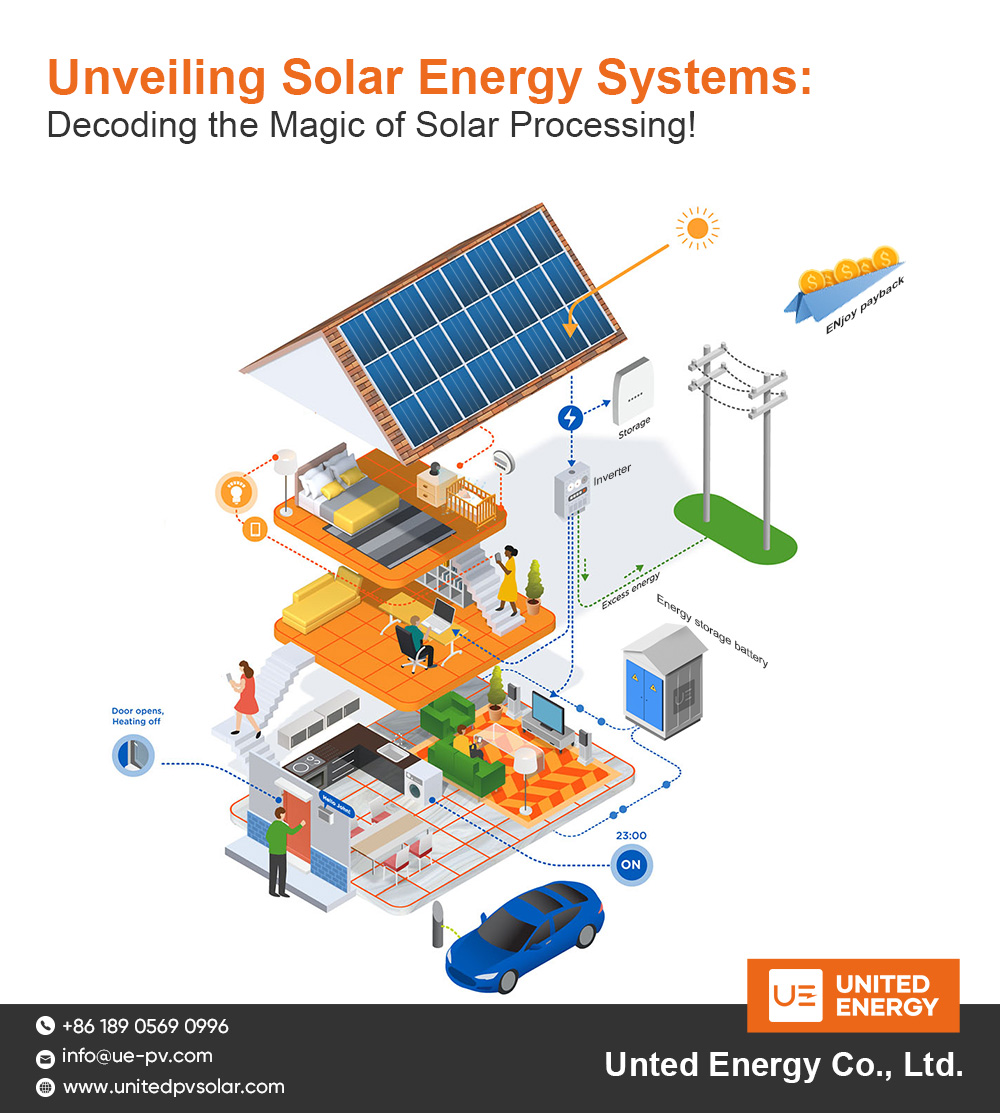
Solar energy systems are like sophisticated energy factories, consisting of production lines (solar panels), processing equipment (inverters), warehouses (storage batteries), factory buildings (mounting structures), and roads (cables). Only by carefully tuning and perfectly fitting each component of the system can we minimize costs and maximize benefits, providing users with continuous and stable clean energy.


Solar Panels: They are like production lines producing electricity, capturing photons from sunlight and releasing electrons to generate direct current. These currents form circuits by connecting batteries together, much like workers on a factory production line continually processing raw materials into secondary raw materials. Note that at this stage, the electricity generated by the photovoltaic panels cannot be directly used for household appliances.


Solar Inverters: These devices are like fully automatic processing equipment in factories, capable of converting direct current into alternating current required for household electricity. Inverters receive direct current from solar panels and then convert it into standard currents, frequencies, and voltages required for household electricity through internal electronic devices, ensuring compatibility with the grid or household electrical equipment.


Storage Batteries are like storage warehouses in factories, used to store surplus electricity generated by solar panels. These batteries can provide backup power during the night or in bad weather to ensure continuous power supply to homes. They also help balance the differences between power demand and supply, improving energy utilization.


Mounting structures are like the infrastructure of a factory, supporting and fixing solar panels to ensure they are securely installed on roofs or ground. The design and installation of mounting structures can maximize the reception efficiency of solar panels and ensure their safety and stability under adverse weather conditions.


Cables and other accessories are like the roads and connecting devices of a factory, connecting various parts of the solar energy system to ensure smooth transmission of energy. They include wires, connectors, circuit breakers, etc., ensuring that the current in the system can be safely transmitted and supplied to household electrical equipment or the grid.


Choose UE, Choose Peace of Mind and Efficiency! Every solar energy system designed by us has undergone superb engineering design and rigorous testing to ensure reliable performance, efficiency, and stability while keeping costs low. This means that our systems not only have excellent durability and long lifespan but also have high adaptability and flexibility, making it convenient for customers in different countries and regions to install and expand solar energy systems. UE-designed solar energy systems can bring long-term economic returns to customers, achieve dual savings of energy costs and maintenance costs, and provide the best support and cooperation for local solar installation businesses."


Top

What does an ESS (Energy Storage System) include?

Energy storage technology is crucial in driving the development of the new energy industry. Advanced energy storage is not only a fundamental technical basis for building a new energy system and promoting a green and low-carbon energy transition, but it is also key to achieving carbon neutrality and peak carbon emissions. Energy storage systems can eliminate day-night peak-valley differences, ensure smooth output, provide peak shaving and frequency regulation, and serve as backup capacity. This meets the requirements for the stable and safe integration of renewable energy into the grid, significantly reducing wind and solar curtailment.


Here is a typical distributed energy storage system architecture:


The energy storage system is composed of batteries, electrical components, mechanical support, thermal management systems, bidirectional power converters (PCS), energy management systems (EMS), and battery management systems (BMS). The batteries are arranged and assembled into battery modules, which are then fixed into battery cabinets along with other components. Below is an introduction to the key parts of this system.


Battery System


Advanced energy storage batteries, as one of the key technological routes, play an important role in increasing the absorption rate of renewable energy and ensuring the safe and stable operation of the power system. Lithium batteries, as crucial components of energy storage, determine the progress of electrochemical storage. Lithium batteries are divided into lithium iron phosphate batteries and ternary lithium batteries based on the cathode material. The energy storage market mainly uses lithium iron phosphate batteries. Eliminating day-night peak-valley differences is the primary application scenario for energy storage systems, and product lifespan directly affects project returns.


Thermal Management System


If the battery is likened to the body of an energy storage system, the thermal management system is its "clothing." Batteries need to operate in a comfortable temperature range (23~25℃) to achieve optimal efficiency. If the battery's operating temperature exceeds 50℃, its lifespan will rapidly decline; below -10℃, the battery enters a "hibernation" mode and cannot function properly. High temperatures severely impact the lifespan and safety of the energy storage system, while low temperatures can cause the system to cease functioning. The role of the thermal management system is to provide a suitable temperature for the energy storage system based on the ambient temperature, thus extending the system's lifespan.


Battery Management System (BMS)


The Battery Management System (BMS) acts as the link between the battery and the user, primarily to improve battery utilization and prevent overcharging and over-discharging. Voltage, current, and temperature are crucial parameters of the energy storage system. Using complex algorithms, the system's SOC (State of Charge), thermal management system operation, system insulation detection, and battery balancing can be inferred. BMS should prioritize safety in its design, following the principle of "prevention first, control as a guarantee," to systematically address the safety management of the energy storage battery system.


Bidirectional Power Converter (PCS)


The power converter in an energy storage system is similar to a phone charger, converting AC power to DC power for charging. The PCS in an energy storage system is a large-scale charger, but it is bidirectional. It acts as a bridge between the battery stack and the grid, converting AC power from the grid to DC power for the battery stack on one hand, and converting DC power from the battery stack to AC power for feeding back to the grid on the other.


Energy Management System (EMS)


The Energy Management System (EMS) is crucial in an energy storage system. It integrates information from all subsystems within the energy storage system, fully controlling the system's operation and making relevant decisions to ensure safe operation. EMS uploads data to the cloud, providing operational tools for the operator's backend management personnel. It also facilitates direct interaction with users. Maintenance personnel can use EMS to monitor the energy storage system's operation in real-time, achieving real-time supervision.

Top

What is an Energy Storage Inverter, and What are Its Functions and Advantages?

An energy storage inverter represents the latest generation of inverters available on the market. Its primary function is to convert alternating current (AC) into direct current (DC) and store it in batteries. During a power outage, the inverter converts the DC stored in the batteries back into AC for user consumption. This device allows for bidirectional conversion between grid power and battery power, overcoming the limitation of photovoltaic (PV) inverters that can only be used during the day. This capability is a significant reason for its growing popularity among users.

Energy Storage Inverter


Functions and Advantages of Energy Storage Inverters:

  1. Overcoming Weather Constraints The ability to convert AC to DC and store it means that energy storage inverters can provide power during outages, significantly reducing the impact of weather conditions on power generation stability and enhancing the overall stability and quality of the grid.

  2. Higher Energy Efficiency Compared to grid-tied PV inverters, energy storage inverters offer higher energy efficiency. They not only overcome limitations related to weather and time but also address issues associated with grid-tied PV inverters. They provide users with more stable and long-lasting power, avoiding inconveniences caused by power system failures.

  3. High Stability In the event of a grid system failure, energy storage inverters can convert stored DC directly into AC for the grid, minimizing external influences and reducing electricity costs. They offer high stability. During peak electricity usage, the inverter converts solar DC into AC and feeds it into the grid; during off-peak times, it converts grid AC into DC for storage, allowing for bidirectional conversion and robust power support during outages.

Additionally, energy storage inverters provide more stable, cleaner current with fewer harmonics, aligning with current energy-saving and emission-reduction trends and further enhancing grid stability and quality.

In summary, energy storage inverters overcome the limitations of traditional PV inverters by providing high-quality power to the grid system, reducing electricity costs, and improving energy efficiency. These advantages ensure that energy storage inverters hold a competitive edge in the market.

Top

What Is Heterojunction Technology (HJT) in Solar Industry

Heterojunction Technology (HJT) is spearheading a new era in solar cell development, pushing the boundaries of efficiency and power output in photovoltaic systems. This advanced technology seamlessly blends the strengths of monocrystalline silicon and amorphous silicon thin-film, resulting in a Hybrid Solar Cell that excels in performance.

At its core, HJT involves stacking monocrystalline silicon wafers with amorphous silicon layers, creating a heterojunction that optimizes the unique advantages of each material. Monocrystalline silicon ensures a stable and consistently high efficiency, while the amorphous silicon layer extends light absorption capabilities across a broader spectrum. This synergy empowers HJT solar cells to capture solar energy more effectively, particularly in challenging lighting conditions.

What sets HJT apart is not only its exceptional efficiency but also its impressive power output. With an average efficiency exceeding 23%, HJT Solar Modules have demonstrated the capability to reach a power output of 380 W for 60-cell panels and up to 452.5 W for 72-cell modules. This remarkable performance is a testament to the technology's ability to maximize energy production.


In recent years, HJT has gained widespread recognition as a frontrunner in the solar industry, offering a compelling combination of efficiency, power, and cost-effectiveness. With a steady rise projected, HJT is anticipated to secure a significant market share, with estimates reaching 15% by 2029.

As the global demand for sustainable energy solutions intensifies, Heterojunction Technology stands as a beacon of innovation, providing concrete parameters of increased efficiency, elevated power outputs, and a promising trajectory toward a more sustainable and energy-efficient future.

.

Top